11 must-know phrases for foreign travel

This entry kicks off a week-long series of travel-related musings and advice on The Canterbury Tales. I’m in a travel-y mood; I leave for England three weeks from Tuesday!

While most locals appreciate you taking a stab at speaking the language, no matter how awful you sound (here’s looking at you, France), no one really expects you to speak fluent Spanish/German/French/Norwegian/Japanese/whatever.

However, there are a few words and phrases that you should always know beforehand when visiting countries that speak something other than your native tongue. Many rural areas (and some urban ones, too, like eastern Berlin, in my experience) will be short on English-speakers.

11. “Hello.” An obvious mainstay. You’re trying to make friends!

10. “Please” and “Thank you.” There’s really no excuse for not practicing common courtesy while traveling.

9. “What time is it?” If you’re like me you have a watch on you at all times, but this doesn’t hurt, especially if you’re antsy about catching your ride on time.

8. “How much does this cost?” This can help you avoid embarrassing situations at the cash register; you didn’t really want to spend 40 euros on that AC Milan jersey.

7. Words for basic food. Trust me, when you look at a menu in a foreign language, you want to know what you’re ordering. I once mistook fish (poisson) for chicken (poulet) at a Chinese restaurant in Paris. In hindsight, I’m lucky fish was all I got.

6. “Where am I?” Everyone gets lost. Knowing how to ask a local where you are ensures that you won’t stay lost.

5. “How do I get to the bus station/train station/airport?” It goes without saying that you should always carry a map of the city you’re in, but sometimes getting to a station or airport can be confusing, especially if the city doesn’t have any or many cabs.

4.  Days of the week. Knowing these can help you in a variety of situations, from reserving theater tickets to asking about museum openings to booking airfare or trainfare.

3. Numbers one through 10. Because when you order certain things (like, say, bottles of wine, steak or slices of cake … mmm, cake), it’s important to get one, and not one hundred.

2. “Where is the toilet?” This one doesn’t really need an explanation. Everyone pees.

1. “Do you speak English?” Well, at least you tried.
An update on school

Barring a catastrophe (or government bureaucracy), I’ll be heading back to England in about two and a half months. It seems unreal how fast this year went by.

After a somewhat slow spring in terms of updates and news, I finally received solid information on my loans a few days ago. I’m thankful that the bank-managed Stafford loans were replaced with government-managed loans. The interest rates are lower and my school can take a more proactive approach instead of waiting for a bank to get back to them.

I ticked down the checklist — completing the FAFSA, filling out a promissory note, completing online loan counseling and sending Kent the updates — and now I wait, with a lot of pressure off my shoulders. I’m hoping I have solid acceptance information in a few weeks, so I can arrange for my airfare, my housing (yay Woolf College!) and my visa.

Until I get my news, I’m trying to be productive. I started a list of stuff to take with me, I’ve been researching Canterbury and what to do there, I’ve picked out a new bed set and I’m starting a sports editing internship with The Kansas City Star. My job starts Monday, June 28, and barely a week and a half after it ends, I leave. Very heady. I don’t think it will really set in until I get my visa stamp, and maybe not even until I get on the plane.

Have book, will travel

I spent the weekend visiting a friend in Lawrence, and after lunch, we headed to Border’s to look at the travel section. Sitting on a bench directly in front of the European section, I couldn’t believe just how many travel guides there were. I don’t know how anyone could pick out a travel guide, short of throwing a dart randomly at the shelf.

There were maybe 20 different travel guides just for London, and I can bet that probably 90 percent of them tell readers to see Big Ben, Trafalgar Square, Buckingham Palace, the Tower of London, Westminster Abbey and St. Paul’s Cathedral. Do you really need a travel guide to tell you that? You also don’t need a Paris travel guide to tell you to see the Eiffel Tower and the Louvre.

I prefer travel guides and travel writers who give me credit for already knowing about the big tourist sites. I know that if I’m in Rome, I need to see the Vatican. But at night, after the museums close, where should I go for a drink? Where’s a good place to eat? Are there any tips and tricks on how to avoid lines, where to catch the train and when to hit the town’s flea market?

That was a major consideration when I was planning my travel magazine for the journalism elective credit. I wanted something that would give students studying abroad a taste of authenticity, telling them that they were living in these places and actively participating in day-to-day events. I wanted the magazine to take the snippets in travel guides and expand on them.

Which brings me to my personal favorite travel guide: Let’s Go. My friend and I used the European guide on our backpacking trip. It helped us find an incredible variety of non-touristy restaurants, including a beer house in Munich, a wienerschnitzel restaurant in Salzburg, a tapas bar in Barcelona and the best Italian food I’ve ever had in Florence. We learned what days to avoid hitting the museums, were warned of sites that were tourist traps and also found some great bars. While the major attractions were all covered, most of the book discussed practical considerations.

My goal when traveling is to never (or rarely) be tagged as a tourist. To me, a tourist is gaudy, rude, loud, uninformed and gawking. I had a terrible experience with a pushing, shoving and rude group of American tourists (all in their 40s and 50s) at the Vatican and swore I’d never be like that. I’ve had Britons ask me for travel advice on the Tube, and in Madrid, German hostelers asked me about places to eat, auf deutsch. I’m flattered when people assume, based on my attitude, carriage and actions, that I know what I’m doing. And a lot of that is down to knowing what travel guides cater to travelers, and which ones cater to tourists.

Paris on my mind

In exactly 256 days (give or take a day, depending on when we book our flight), I’ll be on my way back to London, which, I maintain, is the greatest city in the world.

Yet for the past week or so, its cousin across the Channel has been relentlessly popping up everywhere. Yes, it’s that “other” city: Paris.

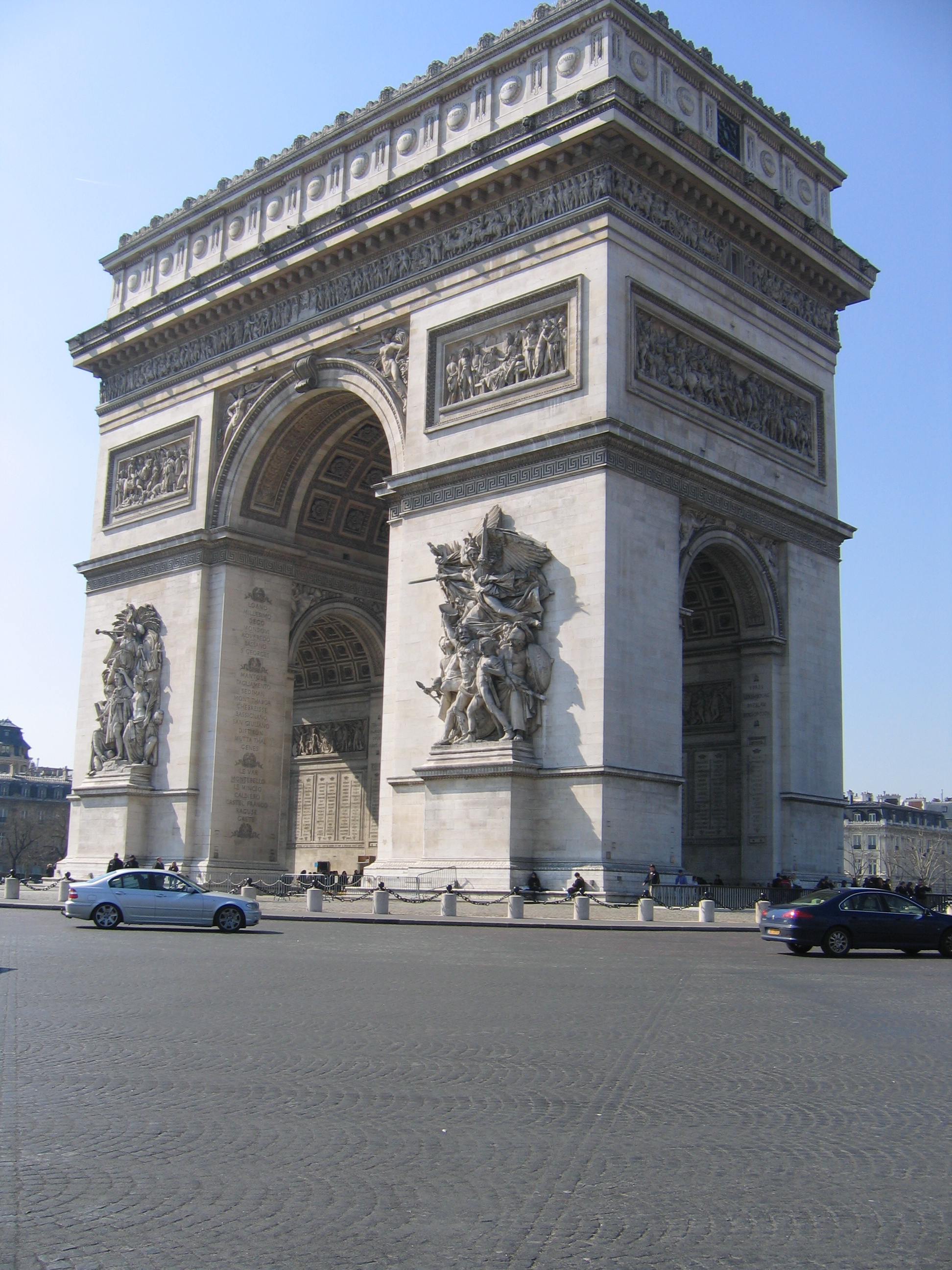
Arc de Triomph in Paris

All told, I spent about a week in France, five days of which were in Paris. My first night there was pretty miserable — it was dark, cold, rainy, and what little French I knew escaped me. I remember finding my way around the train station with my friends by reading the signs in German.

Now though, that first frustrating night is kind of an inside joke, and my Parisian memories are more pleasant. Chocolat au pain for breakfast, and crepes in the afternoon. Seeing the Mona Lisa at the Louvre and work by Van Gogh, Renoir, Monet, Cezanne and Toulouse-Lautrec at the Orsay. Perfume shopping, lunch in the Tuileries and going to the top of the Eiffel Tower.

That was in March 2007. I haven’t been back to Paris since then, but I’ve often thought about it, even though Britain has gotten most of my attention.

My mother has always loved Paris and I hope to take her there some day. I called her from Paris on her birthday that year, and told her about it. She’s decorated our living room — it’s more like a parlor — in kind of an eclectic European style. We have posters with French text, English and French decorating books, a little wooden lorrie, a dish with coins from all over the world and my postcards in a display on the wall.

For Christmas this year, I ordered black and white prints of three of my Paris photos and made them into a triptych for my mother. Looking through all my photos made me realize how much I’d enjoyed Paris and how much I wanted to go back.

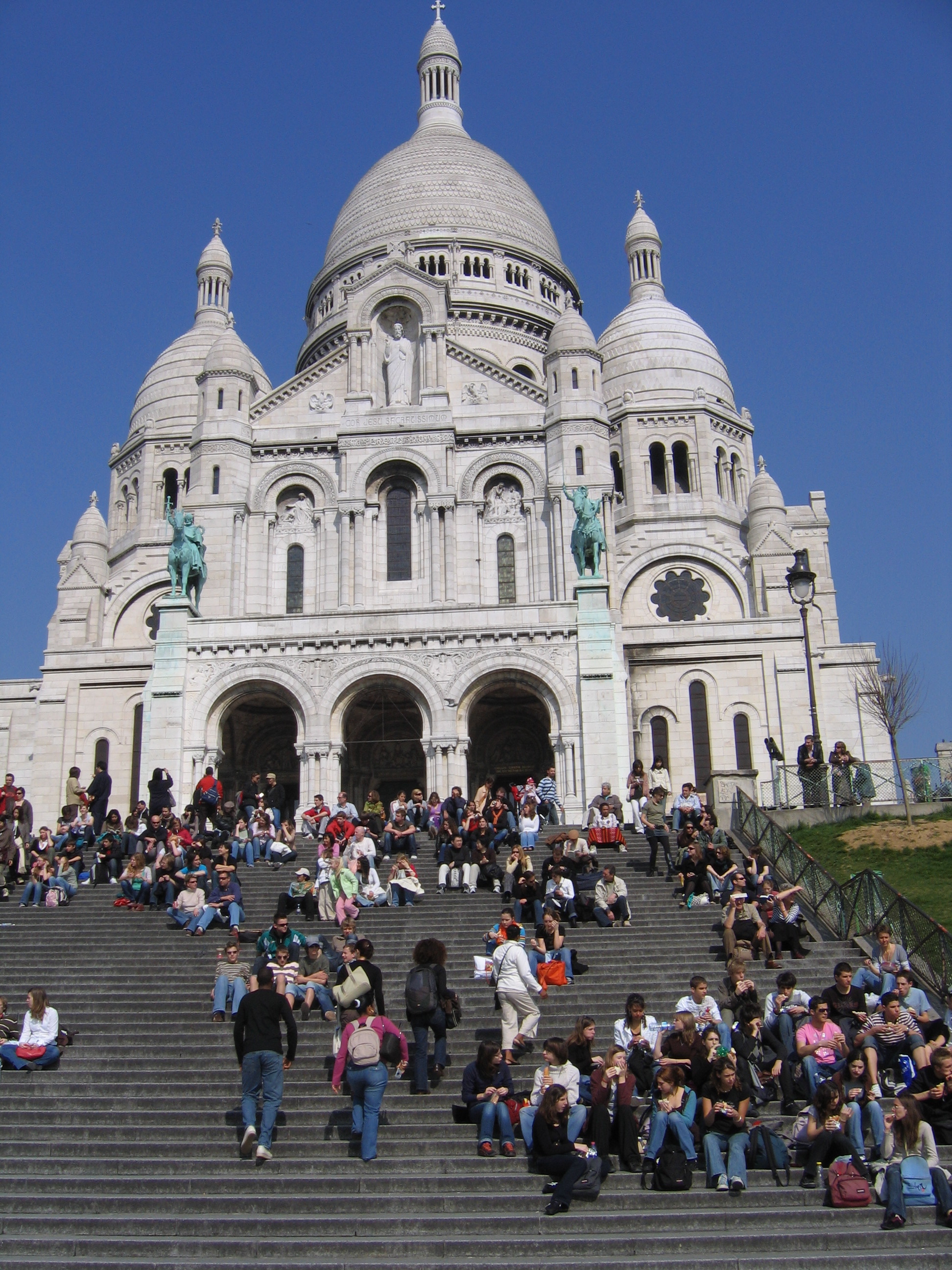
The Sacre Coeur

When I read that the Eurostar line (which runs from Waterloo Station in London and has connections in Paris and Brussels) had closed indefinitely, I wondered if I’d have to fly into Charles de Gaulle instead of take the train to Gare du Nord. It was then that I knew that going back was a serious consideration.

New Year’s Eve brought two separate references to Paris, and I wondered if they might be omens.

I watched Revolutionary Road with my parents and saw Frank and Alice Wheeler’s giddy excitement as they planned to dump Long Island’s mundane suburbia for a life in Paris.

After midnight, I watched the series finale of Sex & the City on TBS. The two-parter shows Carrie moving to Paris with her Russian boyfriend. Seeing Carrie trip over her French and wander around aimlessly looking at museums and bookstores reminded me of myself — sans Mikhail Barishnikov. Of course Carrie got her happy ending in Paris when Mr. Big came to get her.

London, obviously

London, obviously

Finally, during It’s Complicated, which I saw today, Meryl Streep described living and studying in Paris to Steve Martin while she made him some incredibly yummy-looking chocolate croissants.

It seems like there have been a large number of Paris-themed developments these past few days. I’m not sure if there really has been such an increase, or if I’m just noticing it more, or if it’s a coincidence. I do know that it all just makes me want to go back to Paris … for the crepes, of course. And the coffee. The cheese. And those delicious smoked-salmon quiche thingies they sell in cafes.

My French class starts in about two weeks. I already know how to say hello, good-bye, thank you, numbers and a few other random phrases. Paris is the last city I want to ever be in where I don’t have a good grasp on the language, so I’m going to make a lot of effort. I hope soon I’m 3-for-3 when it comes to major languages of the EU.

London will always be my first and biggest transatlantic love, but I think I’ll dance with Paris at least one more time.

For Real This Time

Today was a nasty, cold, rainy, icky day. I didn’t even leave the house. Luckily, a ray of sunshine came through and brightened my day.

A nice flat envelope with the Airmail stamp on it arrived. Inside were my papers from the University of Kent — my deferred acceptance letter, a packet of housing information and a letter I need to sign confirming my place. It was an amazing relief, like coming home to find your chair has been kept warm.

As soon as I send a copy of my passport photo page, my transcripts and degree confirmations from the University of Kansas and my signed letter of intent, I can start working on all those other little details. Getting a FAFSA filed early next year, getting loan paperwork done, applying for housing.

My home next year will be Woolf College, a grad students-only complex. I’ll snag a large bedroom with my own bathrom and share a macked-out communal kitchen. After communal (and I mean communal) bathrooms in Reading, it’ll be nice to have my own loo. I’ll be just up the road from the town centre, which my research and Google-map surveillance shows has necessary amenities such as Boots, Tesco, Sainsbury’s and an Odeon cinema. I’ll figure out the bus routes and become friendly with Canterbury West rail station. I have new bed linens picked out and an eye on a student rail pass.

I have my classes more or less picked out. I’ll have six over the year: European Union policy, human rights policy, international security, political economy, research methods and an international relations survey course. I’ve even scouted all of my books on Amazon — I can get EVERY book for EVERY class for the cost of what the books for ONE class would cost at a first-run bookstore. Yeah, I’m good.

So, after a couple of months of feeling a little blue over my decision to defer, I now feel excited, refreshed and optimistic.

I set up a countdown Widget in Dashboard today. 320 days until Sept. 14, 2010, the day my parents, grandmother and I leave for London on a family holiday and to get me settled. I’ll get settled in Canterbury (about an hour and a half southeast of London by train) on Sept. 19, and Freshers Week and orientation starts Sept. 20. Sept. 27 is my first day of classes, and graduation is in July at Canterbury Cathedral.

Let’s roll.

Hiking Up to Dracula’s Castle(s)

I like to plan a lot of trips at once. I’ve got three good ones going now, one of which is an eastern European jaunt to Prague, Warsaw, Budapest, Bucharest and three castles associated with Dracula. By Dracula, I mean both the historical figure Vlad the Impaler, and Bram Stoker’s literary character. Further research has shown that I might not meet a vampire on my trip, but I will probably end up climbing a hell of a lot of steps.

I’ve always been interested in vampires and vampire folklore (no, I don’t consider “Twilight” to be legitimate vampire anything, sorry), and I love traveling, so it seemed like a good idea to work a castle tour into the eastern European trip.

Bran Castle gets most of the press relating to Dracula. It’s the castle that inspired Bram Stoker, and it’s quite lovely. Thing is, Vlad himself never set foot in it. So while I plan to visit Bran and take in all the vampire tourist traps, it’s a literary destination only.

Poenari Castle is the real McCoy. Vlad moved in when the castle was already old and dilapidated, and fixed it up. It’s supposedly one of the most haunted places in Europe. We’ll see. The place is crumbling and isolated, but apparently it is possible to get up there, if you’re willing to climb 1,500 steps. 1,500. I think the most steps I’ve ever climbed in one go at KU was like 100, shuttling back and forth between the two journalism buildings.

Perhaps the coolest/creepiest thing that Poenari is known for is the dramatic suicide of Vlad’s wife. Learning that the Turks were knocking on the door, she threw herself from the castle into the river below rather than be taken prisoner. It’s called the Princess’s River to this day.

Poenari reminds me a lot of Hohensalzburg fortress, a monstrosity that I climbed in Salzburg. According to the museum at the (very) top, Hohensalzburg (‘hohen’ in German means ‘on high’ or ‘above’) is such a good specimen of medieval castles because it was never successfully sieged. I can imagine an invading army standing below staring up (and up, and up) at it and thinking, “Screw this, let’s find some beer.”

Hohensalzburg Fortress

About 1,124 steps up Hohensalzburg fortress. Poenari is like this, only with more vampires, ghosts, Romanians and crumbles.

I seriously remember hiking up to Hohensalzburg, and being afraid that I would literally fall down the mountain. In the final stretch up to the ticket booth, the path had railings and wooden grooves to keep you from taking a header backwards. Now of course there was a little sky car thingie that took you up without having to climb stairs. But climbing up on our own was such a wonderful experience and … OK, it was mostly because we were really cheap.

So, if I can handle the Austrian monster, I’m sure I can hike up to Poenari.

Our third and final castle, Hunyad, is where Vlad was held prisoner for a few years in between his reigns. Back then, Hunyad was in Hungary; today it’s Romania. While it doesn’t have the literary heft of Bran or the sheer creep factor of Poenari, it’s still pretty sweet.

I’m not entirely sure when this trip will happen. It was a good year or two between when we first planned Europalooza (a monster four-week trip across western Europe) and when we finally got to go, so I’m not holding my breath for this eastern European trip.

Something tells me, though, that the castles will still be there in a few years.

The “Race Beat”

Two weeks ago, I visited Little Rock, Ark., with my parents. The day after visiting Bill Clinton’s presidential library, we drove to a more suburban part of the city to see Little Rock Central High School and the accompanying little museum.

Little Rock Central High School.

Little Rock Central High School.

After Brown v. Board of Education in 1954, integration began in the nation’s schools. In 1957, nine African-American students attempted to attend Central High. Protests, threats and harassment were rampant, and Gov. Orval Faubus attempted to keep the students from the school. In the end, President Eisenhower had to call in the 101st Airborne to protect the students, while federalizing the state’s National Guard.

The museum had the displays you’d expect. A history of discrimination, photos and audio of protests and sit-ins. Video of news broadcasts and press conferences. It was a display in the middle of the museum, however, that caught my attention. This display was simply called “The Press.” It displayed headlines and front pages from the Little Rock crisis, and explained how in many cases, throngs of reporters and photographers took the brunt of protesters’ anger, acting as a buffer for the nine students.

I just started reading a book, “The Race Beat,” by Gene Roberts and Hank Klibanoff. I found it in the site’s museum. It’s a fascinating story about journalists’ role in the civil rights movement. In many cases, it’s not that these journalists “took sides.” It’s that they bothered to cover the movement and the inequality at all. It’s that they allowed civil rights leaders the opportunity to present their cases. The cause also showed up in staff editorials, when progressive editors, both black and white, called for change. It’s a powerful reminder of a free press’s necessary role in a democracy. One can’t exist without the other.

Reading about this time period reminds me of lessons I learned while in school. Journalists don’t exist in a vacuum. We’re not mindless automans, reading the weather and sports agate like robots. I also learned that while we should always strive for fair coverage, we should never think that fair automatically means equal. Or that equal automatically means fair.