Bodiam Castle and Rye

On Saturday, I went on a day trip with the university chaplaincy (I’ve been attending Anglican services on Sundays) to Bodiam Castle and the small town of Rye, both in East Sussex.

The castle was built in 1385 by Sir Edward Dalyngrigge (that’s a mouthful), who served King Edward III and received permission to build the castle from King Richard II. Its intended purpose was to stave off a French invasion during the Hundred Years War. The castle itself was built with an artificial moat and was the seat of the feudal Bodiam Manor.

Its owners seem to have had a bit of rotten luck over the years. Dalyngrigge himself died in combat on a knightly campaign, and its next owner, Sir Thomas Lewknor, made the mistake of supporting the Lancastrians during the Wars of the Roses. King Richard III confiscated the castle, although the Lewknors eventually got it back when King Henry VII took over.

During the English Civil War, its owner was John Tufton, who was a Royalist. Another owner on the wrong side of the victors, Tufton had to turn the castle over in the face of heavy taxation. The castle was torn apart, and passed down to Lord Curzon, who tried to fix it up and gave it to the National Trust in 1925. The castle is mostly ruins inside, but has a remarkably intact exterior.

Not too far away is the town of Rye, sitting up on a hill. Back when it was founded, the sea came much farther inland, and the town’s position on the hill kept it from getting washed out. The village is very attractive, with cobbled streets and a wide variety of tea houses, antique shops, cottages and cafes.

Enjoy photos of the castle and village below.

This slideshow requires JavaScript.

Note: Just giving a big thanks to everyone who’s been reading The Canterbury Tales. October 2010 has been my most-viewed month so far, and it’s not even over yet!

An afternoon in Whitstable

My friends (Deborah, Hannah and Rachel) and I had planned to head up north to Whitstable, a small satellite village on the North Sea renowned for its oysters, today. After a couple of weeks of drippy, overcast weather, we couldn’t have expected a truly gorgeous day, as you can tell from the photos at the bottom.

After a lovely Anglican service early this afternoon in Eliot Chapel (during which I read the liturgy and after which I indulged in some lemon cake a few local ladies brought in), I met up with my friends and packed into Deb’s car and drove up to Whitstable.

The beach there reminded me a lot of Maine — more rocky than sandy, windy and cool. We didn’t swim, obviously, but I’d wager it was chilly. Lines of lovely houses, some private, some turned into bed-and-breakfasts, stood up and down the seaside. You could see people swimming and on their boats. I lost track of the number of dogs: spaniels, terriers, retrievers, labs and shepherds of all kinds, some on leashes, some not, all well-behaved. We also found oyster shells to collect.

Up the beach is Whitstable Harbour, which has a fish market and several fresh seafood restaurants. A few boys were catching nice-sized crabs right off the pier using nets. We headed into the town centre, passing all sorts of little shops, cafes and pubs. When we’d exhausted the high street options, we settled in for a late lunch at Coach and Horses. All four of us had a typical “Sunday roast” dinner: Beef (cauliflower-and-cheese bake for Hannah), yorkshire pudding (not really pudding; it’s a pastry used to sop gravy), roasted potatoes and vegetables.

On the way back, we stopped for a few minutes at a penny arcade (I won some sort of magnet game) and then at a little ice cream parlor called Sundae Sundae, where we got cheap waffle cones. Then we had a nice leisurely walk back up the beach to the car. All in all, a lovely day, and it makes me want to go back to Whitstable on a Saturday morning (the buses go there) for the farmers market.

Perhaps most importantly, the evidence of an actual beach in England torpedoes my uncle Tim’s rationale for not coming over in July to see my graduation.

Enjoy the photos below.

This slideshow requires JavaScript.

Note: The period from now until December is VERY busy! So be sure to check back for photos and news from Bodiam Castle and Rye, Guy Fawkes night, Harry Potter & the Deathly Hallows, Bruges and Paris.

How London can use Foursquare

Now that I’m able to successfully take my mobile crack, er, media addiction on the road (thanks to an iPod Touch and, I hope, an Android phone in the near future), I’ve become a major fan of Foursquare. What is Foursquare? Sometimes it’s hard for me to remember that not all of my friends are journalism/social media junkies, and most people probably aren’t familiar with it.

Think of it like Twitter on the move. Basically you “check in” at different venues to which you travel — shops, restaurants, bars, airports, train stations, landmarks, bus stops, churches, grocery stores, boutiques, shopping malls, a damn boat. Experience-wise, you get out of it what you put in — ideally you’ll leave tips and notes at places you’ve been, telling the people who arrive after you what to see, do or eat there. For instance, after having a stellar curry in Canterbury, I promptly listed a tip on the place’s Foursquare listing.

If you check into a place more times in the past 60 days than anyone else, you become the mayor, a post you hold until someone else boots you. You can see where your friends have been, and earn badges for various things, like checking into specific types of venues, checking into many different venues, or checking in a certain number of times.

If you use your imagination, the application is entrepreneurial gold. Several months ago, Gap and American Eagle (I believe) both offered discounts if you checked into their stores. Starbucks offers drink specials for its mayors. The mayor at a Wetherspoon pub in the UK gets 20 percent off his tab. It rewards brand loyalty and in turn, the venue receives your business, and your tips populate the venue’s Foursquare listing. Brands like Zagat, Bravo, The History Channel and the Wall Street Journal have their own special badges that you can earn if you follow them. To earn the Zagat badge, for example, you just need to check in at five different Zagat-rated restaurants.

But what about something such as, say, tourism?

Cities like New York, Chicago, Boston/Cambridge and San Francisco and even entire states like Pennsylvania have badges designed to give people incentives to explore them, like a scavenger hunt. As I was rooting around online looking for free WiFi hotspots in London (which I’m visiting tomorrow to see friends, woo), it occurred to me just how awesome a London-based collection of badges (both for tourists and people who actually live or work there) could be.

  • Check into 10 different Underground stations and get a Tube badge.
  • Hit 3+ musicals or other shows and get the West End badge.
  • 3+ gallery check-ins? Give ’em a Turner badge (a generic Warhol badge already exists for gallery check-ins).
  • Five words: “I’m on the London Eye.”
  • Hit Paddington, King’s Cross/St. Pancras, Waterloo, Victoria and Charing Cross and get a Rail Rider badge.
  • Multiple check-ins in the City gets you a Financial Whiz badge (I know WSJ does something similar for financial district check-ins in New York).
  • Check into 5+ castles or royal residences (not necessarily just in London) and earn a King/Queen for a Day badge.
  • 5+ churches, cathedrals or historical houses of worship, like St. Paul’s or Westminster Abbey, ought to be good for something … pious.
  • London pub crawl badge? Yes, please. Even better, narrow it down by the specific beer associated with each pub.
  • A Borough Hopper badge for visiting 5+ different boroughs, like Chelsea, Westminster, Camden and Southwark.
  • A Sloaner badge for checking into 3+ shops on Sloane Street, or Harrods.
  • The London 2012 badge is so obvious I’m not even going to elaborate.
  • 3+ museums should get you a Rosetta Stone badge.
  • Double-decker badge for 5+ check-ins on a bus.
  • There’s already a badge for checking in on or near a boat, but what about on or near the Thames?
  • Ultimate London badge for checking into 15+ predetermined landmarks (this would be an awesome scavenger hunt/travel itinerary thing).
  • London Nightlife badge for checking into 3+ predetermined bars or night clubs.
  • The Footie badge for checking into 3+ football matches.
  • Earn a Green London badge for visiting 3+ city parks.
  • Check in 5+ times while crossing the Thames and get a Bridge Too Far badge.
  • And this isn’t even counting event-specific badges for things like Fashion Week, the opening of Parliament, Wimbledon, general elections, Trafalgar Square rallies, major sporting events, the queen’s birthday and Guy Fawkes night.

I came up with 20 specific badges right off the top of my head. In addition to the badges, tangible rewards are also easy to figure out — check in on the Eye, get a discount on your next ticket. 15% off museum/gallery gift shops if you earn those badges. Discounted train fare, free entry to landmarks, store deals. So why isn’t anyone (the local government, Transport for London, a media group or someone) doing this already?

Do you really want the Yanks to have all the fun?

A rainy day at Leeds Castle

Yesterday, I went with the other international students to Leeds Castle on the last of our Welcome Week activities. The weather was bad — cold and rainy — but the castle was quite pretty.

The castle gets its name from the Saxon manor called Esledes, not because it’s in Leeds, England (common confusion; it’s actually in Maidstone). It was built in 1119 by Robert Crevecoeur, and ended up in the hands of Edward I. Edward began what I thought was the castle’s most interesting tradition — queenly ownership.

Edward gave the castle to Eleanor of Castile, whose Spanish heritage is kind of felt architecturally, we were told. When Eleanor died, Edward built a chapel in the castle in her honor, and gave the castle to his second wife, Margaret of Anjou. The queens owned the castle outright, independent of their husbands. When the king died, the queen retained ownership until she died. At that time, it’d pass back to the current king who’d give it to his wife. Six queens from the late 13th to the early 15th centuries owned the castle: Eleanor and Margaret (Edward I), Isabella (Edward II), Anne of Bohemia (Richard II), Joan of Navarre (Henry IV) and Catherine of Valois (Henry V). While Catherine of Aragon never owned the castle outright, Henry VIII still fixed it up for her and the couple’s crest is found throughout the building.

The castle is important to the Tudors also. Henry VIII and Catherine stayed there with a retinue of more than 2,000 people when Henry went to France to meet Francis I. Leeds eventually passed into plain old noble hands, until the last owner, Lady Baillie, died and left it to the country in the 1970s.

The lower levels of the castle are meant to have a medieval/Renaissance feel, while the upper levels have a late 19th/early 20th century look indicative of the lifestyle of its last owners (a high-didge French interior designer did the honors). The castle can be rented out for functions or (swoon) weddings. The castle itself is lovely and fairly stereotypical in how we think of “English” castles. The water and moat around it are man-made.

More recently, the castle was used as a hospital during World War II and as a meeting place for many military higher-ups (including Field Marshal Montgomery). On July 17, 1978, Anwar Sadat and Moshe Dayan stayed in the castle before the Camp David Accords.

The grounds also have a golf course, an aviary with several tropical birds, a children’s playground, a hedge maze, an underground grotto and beautiful ponds and green areas. Lady Baillie was a bird enthusiast, and the upper levels of the house all have sketches and paintings of birds. She imported black swans to the estate from Australia, and their descendants are still there.

I was slightly nervous about the swans, mostly because I understand them to be kind of aggressive. These swans, both black and white, were vey docile and ignored people, probably because they’re used to them. There were signs everywhere telling people not to feed the swans because it encouraged aggression. I did learn new things about them — black swans are Australian/Oceanian naturally, swans mate for life (I knew this) and, interestingly, every white swan in the country is the property of the Crown, i.e. the queen.

There were several other birds in residence, mostly geese and ducks. There were many peacocks about, including a mated pair with their two chicks that I, wisely I think, sidestepped on the path to avoid being chased. The aviary has many toucans, macaws, parrots, keas and other birds, and does a lot of avian conservancy around the world.

The hedge maze was good fun, mostly because a lady who worked there shouted helpful hints from the top middle of the maze. Hot cider, tea, cocoa and Kentish apple juice were on sale, as well as kettle corn, crisps (chips), sandwiches and other sweets. A restaurant on the grounds serves pub-style food, fruit, cheese, cakes and roasted meat. There were many, many young families there and I got the impression that it was a popular family destination. They had advertisements for fall and Halloween activities.

All in all, a lovely day. Enjoy the photos.

This slideshow requires JavaScript.

An afternoon in the cathedral

I’ve always thought that Ken Follett’s title The Pillars of the Earth was extremely poetic and lyrical. And nothing says “pillar of the Earth” like Canterbury Cathedral. It’s old (St. Augustine — not that one, a different one — founded it as a monastery some 1400 years ago), it’s beautiful — Gothic architecture and stained glass windows galore — and it invites reflection and consideration.

I traveled to the cathedral earlier today as part of a planned outing for international students. We were split into smaller groups and escorted around for about an hour and a half. Our guide, a delightful little old man who I suspect is a retired volunteer, showed us around.

The main thing about the cathedral is that it’s immense. There’s a lot of empty space, with tall, thin Gothic columns and vaulted ceilings. It’s been steadily added onto and refurbished over the centuries. Some of the projects were completed hundreds of years ago, such as the nave refurbishment. Others are newer, such as the improved main tower, which was extended about 170 years ago. Others, such as a careful restoration of stained glass, are ongoing today.

Our guide led us through the building, from the enormous nave to the quiet, dimly lit crypt. He told us about how Thomas Becket was murdered in the church in 1170 after standing up to Henry II. A gold altar once stood where Becket’s tomb was, and pilgrims would come pray and bring gifts and ask for intercession. Henry VIII, in one of his hissy fits, plunder the altar, declared Becket a traitor and had his body burned, and, rumor has it, shot out of a cannon to prevent people from claiming pieces of it. Cathedral lore says that monks took Becket’s real remains, swapped them for another body and hid them in the crypt before Henry’s men could get to it. But, our guide reminded us, that’s a legend at this point.

This slideshow requires JavaScript.
In the choir, once only accessible to the clergy, is the tomb of Edward, the Black Prince of Wales. Edward died a year before his father, Edward III, and was never king. His son became the ultimately doomed Richard II. Edward’s “achievements,” knightly prizes such as his helmet, vest and gauntlets, are on display near the door. They’re about 650 years old.

Edward was also the guy who originated the Prince of Wales’ motto. In battle, Edward faced John I of Bohemia, who insisted on fighting with his men even though he was old and blind. Shockingly, he was killed in battle. Edward, admiring his, as we say in German, Bälle des Stahls, adopted John’s three-feather emblem and motto, Ich dien, as his own. Ich dien means “I serve” in German, and is the motto of the Prince of Wales to this day.

Right across from Edward is Henry IV, the man who overthrew his son, Richard II, and started the Lancastrian line (Edward and Richard were Plantagenets). Henry IV is the only monarch interred in the cathedral.

There are other interesting people about — like the archbishop who founded an Oxford college and has the privilege of having his tomb kept up and overhauled every 50 years. It’s sparkling with color where others are worn white. Stained glass “cartoons” depict visual stories of miracles being performed. A glasswork by a Hungarian Jew whose mother died in the Holocaust celebrates the end of Nazi tyranny. Some butt-kisser snuck in a picture of Queen Victoria in the Chapter House’s front glass pane, even though she really never had anything to do with the cathedral. The tour had to stop briefly as a soothing female voice over the PA led everyone through an afternoon rendition of the Lord’s Prayer (I think in our group, our tour guide and I were the only ones who actually recited it).

Overall it was a really enjoyable afternoon. I finished it off in the town centre, sipping hot chocolate and people-watching before I picked up some groceries and came back to Woolf.

Stay tuned for Leeds Castle this Sunday …

In Canterbury

After spending a few days in London with the family, I’m finally moved in at the university. I love my room — roomy but cozy, with nice big walls to hang posters and places to stick up photos.

I’ve picked up my ID and done some basic grocery shopping. In the next day or so I’ll open a bank account, and when my loan money comes in I’ll pay my accommodation fees, join the gym and maybe buy a city bus pass.

We had international student orientation this morning, and there’s an international students’ dinner tonight. Tomorrow is a tour of Canterbury Cathedral and the postgraduate induction. Thursday is my program’s orientation, where I’ll meet professors and choose my classes. It’s also the society fair, where you can pick which clubs and groups to join. Sunday is the Leeds Castle tour.

I’m having a lot of fun so far. I’ve met a couple of people who live on my (quiet) block, and gone to a couple of quiz nights with three really nice English girls. I’m kind of taking it easy this afternoon before cleaning up and getting ready for dinner.

More later!

A week out

A week from now, I’ll be on a plane crossing the Atlantic. Probably trying to fall asleep. I’ve never been good at sleeping on planes.

It’s pretty surreal, when I think about it. I’m used to the questions. Have you packed? Not really. Are you nervous? A little. Where are you living? A lovely new dormitory with a bunch of grad students; the ones I’ve chatted with on Facebook so far seem very cool and friendly.

To get a sense of how complicated and delicate this is, I only have to look at my “important papers” folder. It has: my housing contract, my airfare and hotel receipts, my loan letter, my conditional offer letter, my unconditional offer letter, my international-student events receipt, my KU transcript and degree statements, my passport (which includes my precious visa stamp) and my Oyster card (for rolling on the Tube in style). I’ve picked out my classes, applied for a few student jobs and have slowly started to segue back into life at a university.

It’s weird to think of how much work and patience it’s taken to get my here. I try not to think of my break as losing a whole year: I got some much-needed rest, kept up on my news and social-media updates, completed another internship and got my dog. But finally, it’s time to move on.

So, friends, because I’ll probably be quite busy in the next week, consider this my sign-off from American life for the time being. The next time I update, The Canterbury Tales will live up to its name. Stay tuned.

6 notes on the train

This is the fourth and final installment of a week-long series about travel.

A major thing I miss about Europe is being able to get on a train and go wherever I want. That kind of freedom is pretty exhilarating.

To celebrate my love of European mass transit, here are my favorite (or at least most memorable) train rides.

1. My best friend and I missed the morning train to Amsterdam from Paris. For the afternoon train, we had to take first-class seats on the way to a connection in Brussels. My first experience with first-class seats was awesome: roomy seats, a lunch with oranges, a sandwich and cookies, attentive staff. That was the life … for a couple of hours.

2. We took an overnight train from Rome to Nice. There were three of us in the compartment: my friend and me, and an older (quite older) French lady. As I was making my bed with the sheets and blanket, she tsk’d me, took the stuff and made my bed herself, muttering in French under her breath. Merci!

3. In March 2007 I took the train from Reading to Wales to visit a friend for a weekend. The ride home on Sunday night was probably one of the most quiet and peaceful I had ever had; riding through the Welsh and English countryside, one of only two or three people in the car, reading “Harry Potter and the Order of the Phoenix.” Ahhh.

4. We caught an early morning train from Vienna to Salzburg. There were practically no people onboard. We had a six-person cabin to ourselves and were able to stretch out. I remember snoozing and my friend woke me up and told me to look out the window. The train was going through the Alps. It remains one of the most beautiful and jarring (“Wow, we’re in the Alps!”) things I have ever seen.

5. German trains in general are simply awesome. They are clean, sleek, on time and just great. My first ride on a German train involved sitting on my duffel bag outside the bathroom on a train from Amsterdam to Munich. It was still one of the more comfortable, pleasant rides of the trip.

6. Our last train ride of the trip was an overnight ride form Madrid to Lisbon. My friend and I were in separate sleeping cabins. I woke up early — probably about 5 a.m. or so — and couldn’t go back to sleep. I got up and wandered through the train and ended up in the dining car. I had only to sit down and the server had a croissant, a fruit bowl, juice, coffee and a little piece of bacon in front of me. And I ate all of it, even the kiwi, which I usually don’t care for. There’s something surreal about having breakfast on a train before the sun comes up.

12 not-so-obvious European cities to visit

This article is the third in a week-long series about traveling. Again, the focus is on Europe, but please feel free to submit your own non-European cities of choice.

Not everyone has the chance to ever visit a European city, much less several of them. So most people choose to visit the classics — Paris, London, Rome, Amsterdam, Barcelona. And they’re classics for a reason. But there are other cities out there that are just as deserving of your attention.

This list is a combination of cities that I’ve visited, and some that I wish to visit at some point.

1. Edinburgh. There’s Old Edinburgh and New Edinburgh; New Edinburgh is still like 600 years old. There’s imposing Edinburgh castle on one end of the Royal Mile, and Holyrood palace on the other, with all kinds of shops, restaurants and pubs in between.

Edinburgh castle

2. Nice. It’s not as expensive as its Riviera neighbor, Monte Carlo, and not as glitzy, but Old Nice is pretty cool. Go get some rose or violet ice cream at Fenocchio. Wander through the winding pathways and grab a sandwich or a snack at an olive bar. The beach (covered with smooth rocks, not sand) is also gorgeous at sunset.

3. Lisbon. It’s easy to forget about Portugal, which is just … sitting … there. Lisbon’s Baixo district has a ton of places to eat and drink, St. George’s castle and St. Jerome’s monastery are great historical sites and the seafood is amazing. I recommend the swordfish.

4. Munich. This place just felt more … German, especially compared with Berlin’s more modern feel. The Marienplatz, the Frauenkirche and the Englischer Garten are all fun places to visit. I also recommend Augustiner’s, a brewery/restaurant with the most delicious weisswurst.

5. Salzburg. Vienna is the prototypical Austrian city, but I enjoyed Salzburg more. You can hike up to Hohensalzburg fortress, enjoy the annual Mozart festival and hit Zum Fidelen Affen for black pudding, wienerschnitzel and amazing Austrian custard balls.

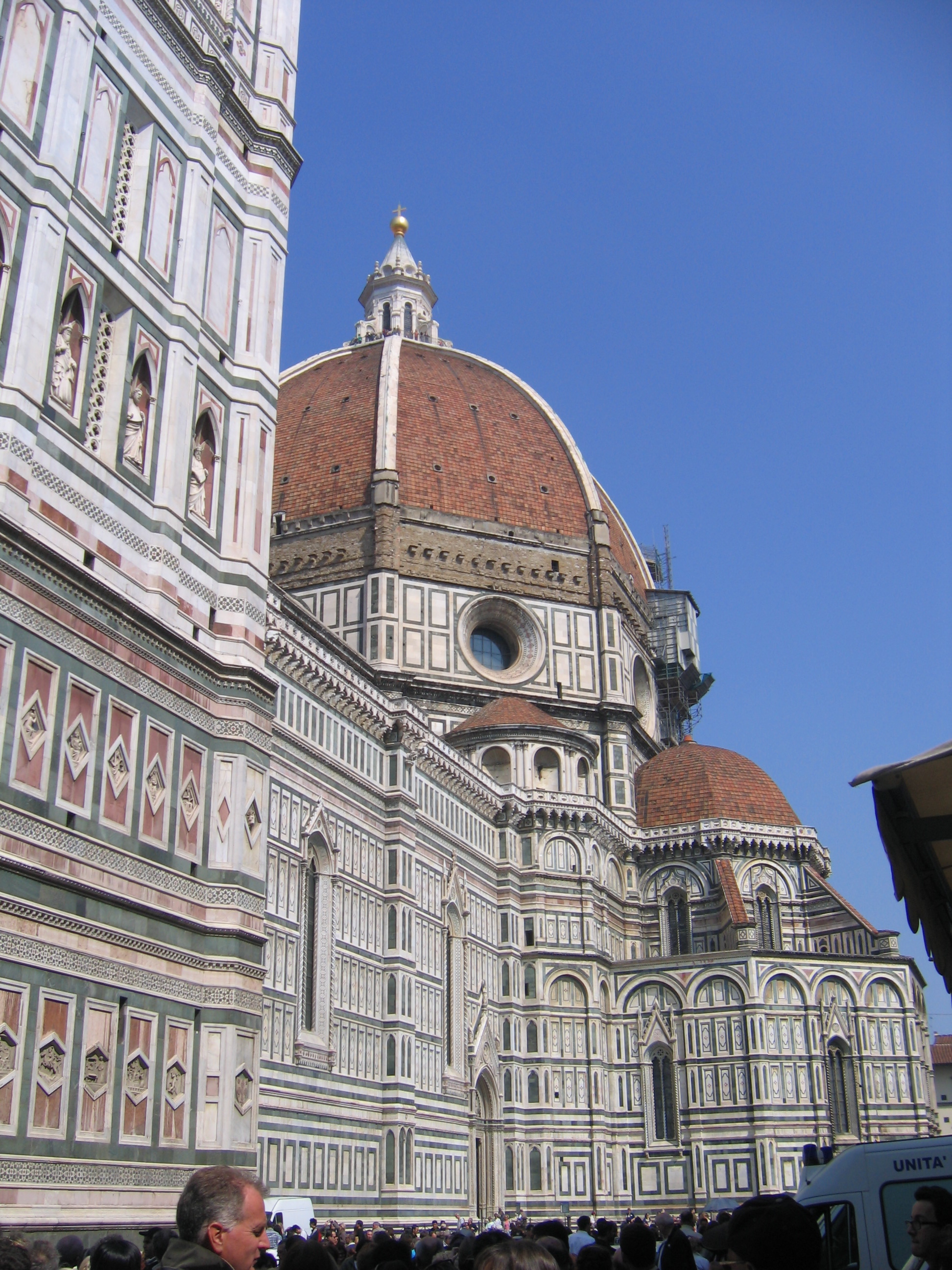
6. Florence. Other than London, Florence is my favorite city in Europe (so far). The art is overwhelming, you can have lunch at a sidewalk cafe right next to the Duomo and the weather is gorgeous. Florence also has the distinction of being the site of my favorite meal ever — a (shared, thank you) bottle of white wine, bruschetta, ravioli in a cream sauce, roasted lamb, roasted house potatoes, chocolate-topped custard and a shot of limoncello.

The Duomo, Florence

And now for six cities that are on my list:

1. Stockholm. This is arguably the hottest city in Europe now, thanks to the Millennium Trilogy.

2. Prague. It’s inexpensive, the architecture is amazing and, as of 2004, the Czech Republic has the highest amount of beer consumption, per capita, in the world — ahead of Germany, the UK and Ireland.

3. Copenhagen. I once read that you could cast a Pepsi commercial by plucking ordinary Danes off the street. Says it all, I think. It’s a perfect combination of continental Europe and Scandinavia.

4. Athens. Greece could really use the tourist dollars, and I really want to see the Acropolis before the Parthenon dissolves from pollution.

5. Milan. It has one of the most beautiful churches in Europe, it’s home to “The Last Supper” by Da Vinci and it’s a major European fashion capital.

6. Belfast. I have not yet been to Northern Ireland; it’s the last country of the United Kingdom I’ve yet to see. I want to go as much to muse on The Troubles as I do to see the city itself and the view of Belfast Lough.

How to not come off like a tourist

This article is the second part of a week-long series about traveling. My main traveling experience abroad has been in Europe, but these tenets should fly just about anywhere.

As I’ve said before, there is a difference between a traveler and a tourist. Travelers go to a place to experience it naturally, even if what it is contradicts what they think they know about it. Tourists often expect a locale to conform to their preset expectations. Travelers go with the flow and behave like guests. Tourists are pushy, obnoxious and entitled.

Here are a few basic ways to set yourself apart from that guided herd ahead of you in line at the Vatican. Note that these tips are also as much about safety as they are about courtesy — someone who’s obviously out of their element makes an easier target for thieves and other miscreants.

1. Attempt to speak the language. The last post offered a list of suggestions to get started. Don’t be frustrated if you go on a wine tour in rural Tuscany and no one speaks English.

2. Familiarize yourself with a map of the city before you get there. Getting lost at some point is almost inevitable, but you can make it easier on yourself by studying your maps on the plane or train before you arrive. It also limits the number of times you have to block street traffic to whip the map out (if you need to, duck inside a shop or something).

3. Don’t just explore tourist traps. Yeah, you go to Paris to see the Louvre and the Eiffel Tower and London to see the clock and Parliament and Buckingham Palace. But so do millions of other people. Take at least a day or two and explore off-beat parts of the city you’re in. Pick a neighborhood on the outer edges, for example, and walk it. Or take a train to a smaller town nearby.

4. Don’t get stupidly drunk. Each region of the word offers its own unique drinks, but that doesn’t mean you need to go crazy (this is especially true if you’re of legal drinking age in your holiday country but not your home country). All your obnoxious antics will do is make a mess and annoy the neighbors.

5. Keep it down. Americans are loud. Many, many other people around the world are not. Don’t scream at them.

6. Eat the local food. Smoked salmon tapas, weisswurst, fish and chips, bangers and mash, French pastries, freshly caught seafood, pasta, wienerschnitzel. All delicious, and yet you’re eating at McDonald’s again. Stop it.

7. Don’t complain about the way things are done. “This isn’t how we do it in Insert-Place-That’s-Probably-Texas-Here!” If you’re perfectly happy with the way things are where you live, stay there. If you dislike how something is done in a different country, suck it up, note it and don’t go back if it bothers you that much. And I just used Texas as an example, don’t jump me.

8. Respect the signage. There is a BIG display right outside the Sistine Chapel that clearly prohibits photographing it. Yet you walk in, and everyone is taking photos. Most annoying and obnoxious thing I’ve ever seen. And just because other people in a place might be acting trashy, tacky and rude doesn’t mean it’s OK for you to.

9. Respect houses of worship. This goes even if you are an atheist or not a follower of the religion in question. Churches, cathedrals, mosques, temples, synagogues — almost all of them, including the ones open to visitors, are still operating houses of worship. Treat them as such and respect the local people who may be praying there.

10. Don’t just stay at the homogenized chain hotels. This is more about getting a good experience. Look up hostels on a site like Hostel World (I recommend the Flying Pig in Amsterdam). If you’re going to be staying awhile, rent a flat or stay with a host family. If you’re a braver soul than I am, look into couch surfing. You’ll meet local people, make friends, get good traveling tips and connect with fellow travelers in ways you never could if you checked into a chain.

11. Travel light. Take only the essentials that you’ll need for the day — passport, tickets, map, wallet, phone, sunglasses, hand sanitizer, camera, key to your room and maybe hand lotion, aspirin or a compact. All of this should easily fit in a purse or other small bag. I’ve seen people in line for museums or at restaurants who look like camels because of all the crap they’re trying to carry. It makes you stick out like a sore thumb, it makes it easier for people to pick something off of you and it’s murder on public transit. The guy on the Tokyo subway trying to get to work does not need your bulging fanny pack poking him in the spine.