The Solo Traveler

It was after 11 p.m. Saturday by the time I was finally able to sleep. I had been awake for almost 24 continuous hours, barring some bad sleep on a plane. My trip back to D.C. had involved a long-distance ICE train, two planes, an airport shuttle, a bus, a subway and a taxi. I was exhausted and sore and still I’d rarely felt more personally satisfied.
Image

I’d spent the last week away, first in New York City for a day visiting a friend, then in Germany over Thanksgiving. It was the first time I had traveled abroad on my own, without going (back) to school or doing something for work. I’d done a European circuit in college with my best friend and had just gone to Sweden with that same friend. But this was different. It felt riskier — apart from simply wanting to go, I had no good “reason” to, no justification. It felt empowering.

I planned and booked the entire thing myself, asking some advice from friends who’d been to the cities I was visiting. I ditched my normally strict tendency to plan every day to the detail, and just did what felt right, whatever I wanted to at any given time. One day this involved eating a plate-sized Schnitzel with fried potatoes and a Frankfurt-style green herb sauce, washing it down with half a liter of beer (that was somehow the smallest glass available). I ended up visiting a modern art museum, wandering around Frankfurt’s Dom before the sun had risen, strolling through a giant food hall. 

Image

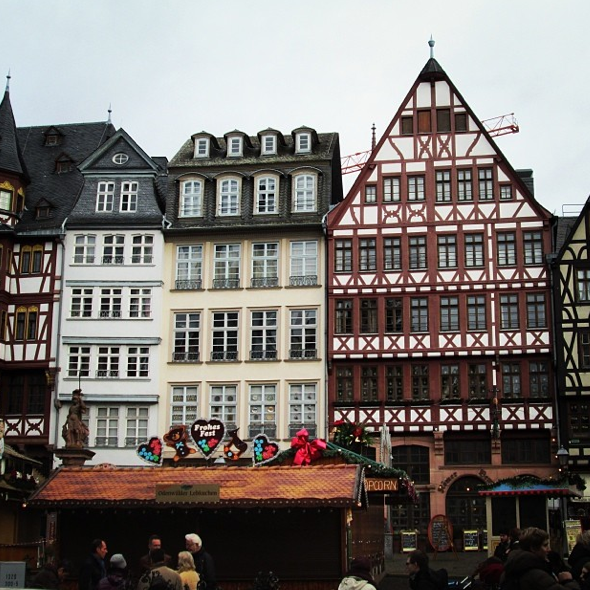
I went to Bonn for a day and wandered around its Münsterplatz, which was packed with stalls for the annual Christmas market. I found a present for my mother, ate sweets from the stalls and just took in the atmosphere.

Thanksgiving morning, I sat alone in an empty first-class train compartment as we zipped through early-morning fog. I saw glimpses of little villages along the river, buildings that looked ancient and sleepy. I wondered, sleepy myself, what it might be like to chuck it all in and settle down in some little burg.

When the train arrived in Cologne, my last stop, the first place I went after dropping off my luggage was to the Dom. More than any other cathedral I’ve seen apart from perhaps York’s minster, it evokes the phrase “pillar of the Earth.” Photos of it, though I took several, do it no justice. It is simply mind-boggling in its enormity and it amazes me that the people living in Cologne must just get used to it, like a stone Godzilla just sitting there.

Cologne’s Christmas market seemed to go on forever; it actually has several of them and they just bleed into each other. I had mulled wine and hot potato cakes covered in apple sauce. Everywhere there are sausages, sandwiches, cookies, cakes, pretzels, wine, hot chocolate and arts and crafts. At night, with the strung-up lights illuminating the sky and the Dom in the background, it’s downright ethereal.

Image

I perused Cologne’s Greco-Roman Museum in the afternoon, admiring the mosaics, jewelry and pottery on display. Later that night, I went on a date and ended up drinking Kölsch in a Brauhaus and sipping hot mulled wine in the Christmas market, snuggling up to stay warm. Thanksgiving indeed.

I’m in that buzzkill-ish period right after a trip, when it’s over and done and you just think, “Well now what?” But going on this trip, short though it was and to a place I’d been before where I more or less knew the language, gave me a lot of confidence. It might be the introvert in me, but I really believe that you have to be able to manage on your own before you can manage with anyone else. So for that reason I enjoyed my taste of solo travel (although I still plan to travel with friends, obviously), and I feel brave enough to do it again. It was also exhilarating to go somewhere just to go, because I could, without it being for school or anything else or anyone else but me. 

I think I owed myself that.
The Hierarchy of Needs

Earlier today one of my friends shared an … edited … version of Maslow’s Hierarchy of Needs. The base — the broadest, most pressing immediate need — was Wi-Fi. Some days, that’s a very accurate assessment.

Maslow’s hierarchy should be familiar to anyone who took a high school psych class, ever. The actual base is physiological fulfillment: food, water, warmth. Next is stability and security. Love — friendly, familial, romantic — is in the middle. After that comes self-esteem and respect. Self-actualization is the highest point. The idea is that you have to fulfill the lower needs before you can fulfill the higher ones.

Marking my one-year anniversary, both at my job and in D.C., has lately gotten me to start reevaluating my needs and what I want out of my life. Despite seeing so many of my friends starting families, I reaffirm to myself that that’s something I want, but only when the timing is right. It’s not something to do just to tick off a box.

I guess the hardest part of climbing the pyramid is figuring out what self-actualization, on an individual level, actually means. Some days I’m afraid that maybe I’m doomed to be a nomad, shifting from place to place without ever putting down real roots. Then I think of staying in any one place forever, and I can’t breathe. So it’s a pull in opposite directions: fear of loneliness on the one hand, fear of being trapped somewhere on the other.

Ultimately, I think, self-actualization (and the accompanying feeling that you’re where you’re meant to be, doing what you’re meant to do, with whom you’re meant to be) is probably like being in love. When you’re there, you know. And if you have to second-guess yourself, look for exits or wonder if you’re there, you’re not.

So for now, until I do get that feeling of actualization and permanency, I’m going to embrace my nomadic nature and appreciate people and places that I know are probably fleeting. And when I get to the “right” place, I’ll know.

Overcoming a mental block

This is very hard to write about, but I think that if I do, I’ll feel better about it.

Sometimes it’s hard for me to loosen up and let go and just let things happen. I like being in control of myself and having a plan, knowing what I’m going to do, and when, and how. But it’s hard to do that when another person is involved. So right off the bat, that lack of control is kind of frightening. At the same time, I have to respect the other party and accept that in this situation, I’m along for the ride.

I’m pretty personally bruised in this area, having been hurt deeply before. It’s been more than a year and I’m still not sure I’m completely over it or if I’ll ever be. But I don’t want it to affect my future with anyone else, and part of making sure that doesn’t happen is overcoming this sense of dread. This fear that at any moment, the other shoe will drop and I’ll be left alone, that I’m unlovable or not worth the effort. That other women are more interesting, or friendlier, more outgoing, prettier, or otherwise superior to me. It hits me at varying times: on the subway, at night in bed, when I walk to the Metro.

It’s a sick, nagging feeling. I have to tamp it down every day. Sometimes I succeed, sometimes I don’t. I try not to let this persistent sense of self-doubt affect the new things, but it’s hard. And I’m terrified of explaining how and why I often feel this way, lest I prove myself right.

I just have to keep at it, keep blocking out the noise and realizing what I really do have to offer.

(Baked goods.)

Just a little bit of wanderlust

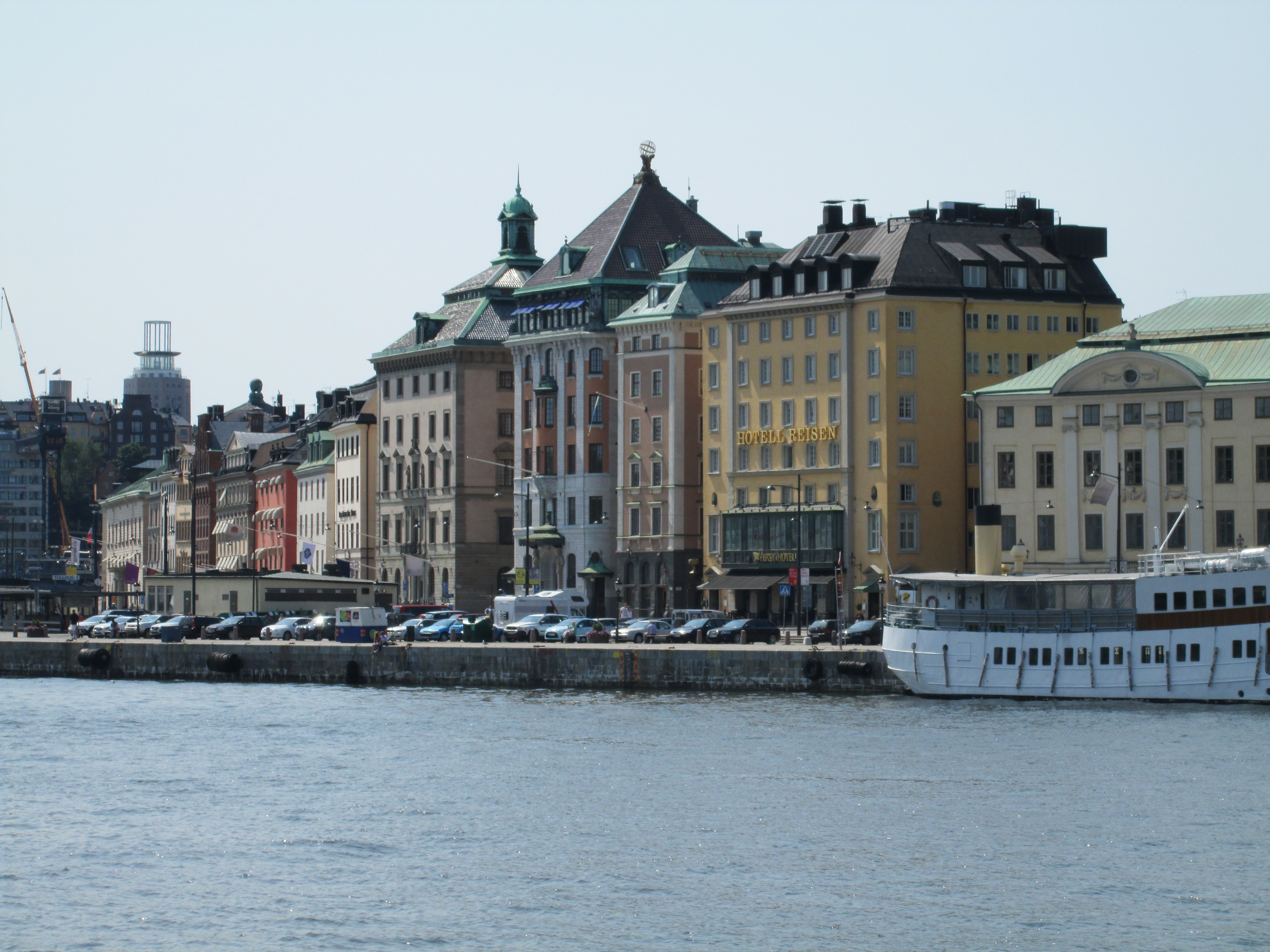
It’s been about a week and a half since I was in Stockholm, and traveling again — especially traveling abroad again — just made me want to do it more. Rather than sate my need to move, it just spurred me on.

Image

Stockholm, while beautiful and full of friendly people and gifted with perfect weather, just didn’t “grab” me the way cities like London, Paris and Florence did. I might not be being fair there; London and Paris are the twin jewels of the continent, and Florence has perhaps the best art collection in the world. Still though, I left Stockholm with a niggling feeling, like I was missing something.

I recently decided that in lieu of spending Thanksgiving in the U.S., I was going to make use of the two paid holidays and take a week-long trip back to Europe. But not to the U.K. — I’m going to Germany. It’s been about two and a half years since I’ve been there, and that was a rushed visit to Berlin to sit the Foreign Service Exam. I’ve only ever been to Berlin and Munich.

This time, I’m taking an early morning train up to New York City, spending a day with friends there, and then flying on a red-eye flight to Frankfurt. I’ll spend two days there, two in Bonn and then two in Cologne. I’ll hopefully see a combination of old and new friends, browse the Christmas markets, practice my (very rusty …) Deutsch and see the Dom in Cologne.

This won’t be my first (or my last) Thanksgiving spent overseas, and I’m excited to see some friends, see parts of Germany I haven’t seen before, and just, in general, escape for a few days. I think that’s what appeals the most to me about travel, especially now that I’m working full time: It’s the chance to fall off the map for a while and to just be accountable to yourself.

See you in a few months, Deutschland.

Going to Stockholm

I haven’t “been” anywhere lately. There was England — which was for school — and D.C. — which I visited for my interview and where I live now — and Boston — where I’ve been before a few times so visiting friends there felt pretty routine.

But this summer, I wanted someplace new. Someplace I hadn’t been before. I settled on Stockholm and sweet-talked Cheryl — my best friend since forever and travel buddy — into coming with me.

I swooned at photos of the islands and the outdoor cafes and the boat tours. I winced at the food prices but admitted the restaurants look amazing. We swore up and down we would eat cheap street food to save money for dinner; we’ll see if we can stick to it.

As is my wont, I’m researching restaurants, cafes, museums and galleries to make the most out of the week-long adventure in July. It’s exhilarating to have something to “plan” again.

Can’t wait.

Everyone is ‘Friends of Hamas’

“If your mother says she loves you, check it out.”

I think just about every working journalist has heard that bit of wisdom at some point. Today’s dose of political journalism schadenfreude ties into it nicely.

Here’s what happened, as near as I can tell. Dan Friedman of New York Daily News called a Hill worker to look into allegations that Defense secretary nominee Chuck Hagel had questionable, anti-Israel ties. Friedman, thinking he was quipping, asked his source if Hagel had ever given a speech to “Friends of Hamas” (the “Junior League of Hezbollah, in France” was also name-dropped but it was “Friends” that stuck).

Fast forward to about two weeks ago when Ben Schapiro of Breitbart.com ran an article claiming that White House officials were dodging questions about Hagel’s association with the group.

Friends of Hamas, of course, doesn’t exist. It’s not a real organization. Friedman had been so sure that his questions were easily spotted as hyberbole that it never occurred to him that someone might run with it. And it wasn’t just Breitbart — other conservative publications picked it up, too.

Dave Weigel of Slate saw all this and decided to take 20 minutes (his own estimation) to do what hadn’t occurred to anyone else: actually do some research to see if Friends of Hamas was an actual group.

This all resulted in pretty much everyone in my Twitter feed trading quips about Friends of Hamas and wondering what the hell Schapiro was thinking when he ran with a scoop without verifying it. Schapiro posted a follow-up, but all it really does is blame everyone but Schapiro himself for what happened. He also suggests that the impetus is on Hagel to disprove all of this. Something about when you find yourself in a hole, stop digging.

Knocking Schapiro at this point is superfluous. But this can be a cautionary tale to other journalists. A reminder that “interesting if true” has the word “if” in it. A reminder to always verify what your sources tell you (Schapiro goes from having plural sources in his original article to a single source in his update, so which is it?). A reminder not to go in with a political agenda, looking for things to validate an opinion you already have. And a reminder that if you’re ever caught doing this, have the grace and dignity to admit you screwed up instead of just digging in deeper.

Lose your copy editors, lose yourselves

I’m a copy editor. It’s been my jam since I passed the Dow Jones editing test way back in 2007. That test led me to my first internship, at The Indianapolis Star. And, barring my master’s work, I’ve never looked back.

I am extremely lucky to be able to make a living as an editor, and lucky to work at a place that still sees the value in keeping a dedicated copy desk. I’ve had crash courses in fracking, the Affordable Care Act, patent law, defense contracting and countless other topics. It makes me better-rounded, and every time someone thanks for me improving a story, finding a better word or correcting a potentially embarrassing error, I feel glad to have come in that day, that what I do matters.

As such I — and many other friends and colleagues in this business — was distressed to see that the number of working copy editors has fallen by about 46 percent in the past decade. By comparison, reporting positions fell by 26 percent, according to Poynter. Apparently, when newsrooms need to bust out the scissors, we’re an easy target.

However, I argue that dismissing the copy desk will in the long run exacerbate problems, not solve them — the same problems that trimming the copy desk were supposed to solve in the first place.

This Steve Myers entry on Poynter last spring sums up exactly what I mean. Myers writes about the dismissal of the Denver Post’s copy desk and the assignment of editing duties to other staffers across the newsroom. Rather than comment on this one way or the other, he simply shares a single headline from the Post: “Downward sprial continues.” Oh yes, yes it did.

What do readers think when they see a newspaper (or website, magazine, whatever) riddled with spelling, grammatical and factual errors? Reasonably, they probably assume that this newspaper is bush league, that it doesn’t care enough to get things right and that it isn’t worth the reader’s subscription dollars. Readership falls, advertising follows and before you know it, the relaxation of financial tensions caused by neglecting the copy desk starts to tighten again.

A quality news organization, no matter the medium, is one in which copy is clean, concise, factual, logical and, yes, spelled correctly. And that requires an investment in copy editors. Take care of them and they’ll take care of your product, and the rest will follow.

(A copy editor, for example, could have told Cindy Adams that Georgetown is actually in Washington, D.C., proper, and that it is no longer 1991.)

Richard III has one hell of a car park bill

As an insatiable student of history, I geeked out this morning when I saw that Richard III’s remains had been found in a car park (a parking lot) in Leicester. (As you might expect, the BBC has the best coverage of the goods.)

The skeleton had taken a fatal head wound, the burial site matched the alleged location of Richard III’s final resting place, the remains matched the time period and Richard’s age, and a mitochondrial DNA test matched known descendants of Richard. Most intriguing, to me, was the fact that the skeleton had a curved spine — scoliosis — that was the basis for calling Richard a “hunchback.”

Richard’s story — the brother of a king who became king himself under interesting circumstances, only to die in battle against Henry Tudor at Bosworth Field — holds political significance even now. Namely, the story shows that history is written by the victors — in this case, the Tudor dynasty, victorious in the final stand of the Wars of the Roses, painted Richard as a deformed, child-killing villain, with the help of one William Shakespeare. And above all, it shows that “might makes right.”

The discussions on the BBC story are fascinating to read. A few decry Richard as a murderer who should be left where he was found. Others say he was framed and that Henry Tudor was responsible for killing Edward V and Richard, Duke of York, in the Tower of London. (While I think we’ll never know for certain, I tend to believe that Richard did it; come at me.) There are those who want him interred in York Minster or Westminster Abbey (right now a Leicester burial is planned). And there are those who insist that Edward IV was not a legitimately born son of Richard Plantagenet, 3rd Duke of York, and Cecily Neville and that Richard III, his younger brother, was the legitimate king after all. Oh, and Henry Tudor (Henry VII) was a usurping jerk.

This last part is interesting for a few reasons. First, Edward IV overthrew Henry VI, the last Lancaster king, and thus could, in theory, have claimed the throne by right of conquest no matter who his real father was. Second, Richard’s claim was largely through being Edward’s brother, based on Edward’s success against Henry VI. Richard and Edward’s father had been a duke but not a king. So if Edward was illegitimate and not qualified to be king, Richard as his brother should not have had a claim either — it’s circular logic, saying that Richard was the rightful king and not Edward, when Richard’s immediate claim was derived from Edward’s military success. If Richard was the rightful king, it follows that Edward must have been, too; if Edward’s claim was bunk, his heirs’ claims must have been too, surely? While it’s true that both men had claims by being descended from Edward III, they were certainly not alone there; the primary argument for the York dynasty at that point was defeating the Lancasters.

And the same can be said for Henry Tudor. Rightful claim or not — Henry’s mother was descended from a legitimized branch of Edward III’s family through his son, John of Gaunt, and his father descended from a Welsh upstart who married Henry V’s widow, a French princess — Henry still defeated Richard and could claim the throne by right of combat.

That justification for rule just seemed lost on much of the BBC audience. Arguing about legitimacy and parentage and the church and rights, while forgetting that in those days, the throne belonged to whoever could keep it. Richard failed, Richard died and Richard lost. And he wasn’t the first one — Henry Tudor (technically on the Lancasters’ side, but who founded the Tudor dynasty) overthrew Richard, who helped overthrow Henry VI. Whose grandfather Henry IV overthrew his own first cousin, Richard II. And on and on back to William I. So who gets to decide who’s rightful? When does a usurper become legitimate, and vice versa? Ask 10 different people and you’ll get 10 different answers. So it goes.

Regardless of how misplaced I think some of the commenting on this story is, it’s nonetheless a huge development in understanding a critical moment in English history — considered the dividing line between the Renaissance and the Middle Ages by many — and I was thrilled that it happened. I also hope that more can be done to understand Richard and how he lived, and maybe even change popular opinion about his reign and personal character. There’s a lot to be learned here, and I for one am curious to see where this all goes.

Please don’t be That Guy on Yelp

According to my Yelp profile, I am on my second year of being Elite in the Washington, D.C., area. I like Yelp because it combines two of my favorite things: writing and dining out. While I use Yelp mainly for fun and to keep track of where I’ve been, I understand that it carries weight in many places.

I always write my reviews in good faith, and I’ve written them for a number of popular D.C.-area restaurants (including Rasika, Graffiato, Jaleo and Founding Farmers), as well as places in Kansas City, Boston, the UK and Paris. I try to write them as soon as possible after my experience, so the information is fresh and accurate.

Attempting to leverage my so-called Elite status to get additional swag, whether it be perks, better service or freebies, has never crossed my mind. For one thing, I can’t imagine the inflated sense of self-worth necessary to do that. For another, I’m still a journalist who believes, like any good professional critic, that a review is only worthwhile if you’re treated like everyone else. For a third, I’m not a scummy human being.

Jezebel today shared a story about a guy who’s setting up a business plan that revolves around, more or less, extorting businesses based on him being a reviewer for sites like Yelp and TripAdvisor. (The original Los Angeles Times stories is behind a paywall, sorry!) He’s distributing the “ReviewerCard,” the idea being that if you flash it and promise to give a good review, businesses will offer discounts, extras and the like. He brags about getting discounted hotel rates by promising to give a good review — the logical conclusion and underlying threat, real or not, being that if he doesn’t get preferential treatment, he’ll write a bad review. The actual quality of the business does not seem to play a role in his reviews; it’s what he can get out of it for himself.

After reading the story, I mostly hoped that Yelp would catch wind of it and disable his account. Professional critics take great pains to avoid being recognized or getting preferential treatment, because they want their experience to mirror that of a regular person’s as much as possible. The idea of New York Times or Washington Post writers telling the hostess that they’re critics, so that fromage plate better be on the house if you know what I mean, is unfathomable. What this guy is selling as “win-win” is really just him being greedy.

Enjoy sites like Yelp for what they are — something that is supposed to be fun, informative and social. Don’t be a tacky egotist who believes that being Elite entitles you to $25 off your bill or whatever.

A Life in Coffee Shops

I currently hold a Level 7 Fresh Brew badge on Foursquare. That’s 30 different coffee shops, 30 different venues for leisurely chats with friends, afternoons reading the paper, quick pit stops before catching a flight or caffeine acquisitions before work. In a probably-not-unrelated note, I reached gold-card status at Starbucks earlier this week.

I frequent the Starbucks in Rosslyn, Va., a few times a week, primarily because it’s close to work, inoffensive and predictable. On my own time, though, I patronize locally owned places. There a few that I love in D.C.:

1. Qualia, a neighborhood gem in Petworth that roasts and grinds its own beans and toasts your croissant for you. Sipping a cold latte out on the back patio on a hot day makes me feel like I could do anything. Earlier this week, when I needed a break from non-stop fiscal cliff updates with work, I went to Qualia.

2. Chinatown Coffee on H Street, a utilitarian oasis of hard floors and spare tables and a long bar. I’ve met friends here, and I’ve simply snagged a table and read the news. The 7th Street pandemonium is only a few minutes’ walk away, but you’d never know it.

3. Peregrine Espresso; I’ve been to its Eastern Market cafe and its Union Market counter. No fuss, quick and efficient and potent. It’s a superb quickie in between shopping stops, owned by a husband-and-wife pair.

Each place serves a different function. I go to Qualia to unwind, Chinatown Coffee to socialize and Peregrine for the pick-me-up-and-go. I vividly remember my first experience with each and I anticipate being a regular at all three for as long as I’m a Washingtonian.

Coffee shops, whether independent ones or chains like Starbucks, seem to be compartmentalized: They’re either homogenous big-box stores, or annoyingly twee. I love these three because they avoid falling into either trap. They offer moments of rest, sanity and, yes, sweet sweet caffeine when I need them the most. And for that, I’ll hold onto them always.